The Responsible Factory  - G179

Image

ESG Solutions Come to Life with Agropole & RIA

In 2026, CFIA Toulouse is placing Environmental, Social and Governance (ESG) issues at the heart of its exhibition.

In partnership with Agropole and the Food Industry Review (RIA), a dedicated area will showcase companies offering practical solutions to address the major environmental, social, and economic challenges facing the food and beverage industry.


Where ideas take flavor!

Agropole is the leading European agri-food technopole, supporting you in the development of your project, from the ideation stage all the way to establishing your manufacturing facility.

With more than 90 companies and nearly 3,200 employees, Agropole is a unique business park in the region, offering essential synergies to help your company grow and succeed.

Facilities and Resources:

  • AGROTEC Technology Resource Center

  • Sensory Analysis Laboratory

  • Physicochemical Laboratory

Programs (depending on your project's stage of development):

  • Incubation Program

  • Early-Stage Development Program (Seed Program)

  • Acceleration Program

RIA, the media platform supporting your agri-food transition!

Innovations, investments, new technologies, sustainability, industrial performance: RIA is the media for professionals who are building the agri-food industry of tomorrow. Through its magazine, website, newsletters and the RIA Podcast, the editorial team gives a voice to those who innovate, transform and move the sector forward.

Agropole is the 1st European agri-food technopole that supports you in the development of your project, from the ideation phase through to the establishment of your manufacturing plant.

With more than 90 companies and nearly 3,200 employees, Agropole represents a unique business park in the region and offers essential synergy solutions for the development of your company!

Find concrete solutions to your CSR challenges

A depositor designed for performance and easy cleaning

With the DVT 1, DOSOTEC offers a depositor designed to meet the demands of the food industry. Its tool-free quick-disassembly system simplifies cleaning and maintenance operations, while its modular design allows it to adapt to different products and viscosity levels.

Available with several hopper capacities, the machine ensures precise and rapid dosing, with ongoing developments aimed at further enhancing accuracy through brushless motor technology and new micro-dosing solutions.

Manufactured and assembled in France, the DVT 1 combines ergonomics, ease of maintenance, and industrial performance.

"Restructured" water for industrial cleaning

EasyCleanFood® and Fastnaet present an innovative washing machine incorporating a water restructuring technology based on the combination of hydrodynamic vortices and magnetic waves. The objective: to enhance the efficiency of product and conveyor cleaning while reducing the use of chemical products.

Designed according to Hygienic Design principles, the machine also facilitates cleaning and maintenance operations thanks to optimized access to critical areas.

The first trials conducted at Agropole will make it possible to evaluate the performance of this technology, with the results to be presented at CFIA Toulouse.

Thermoforming Made Accessible to SMEs

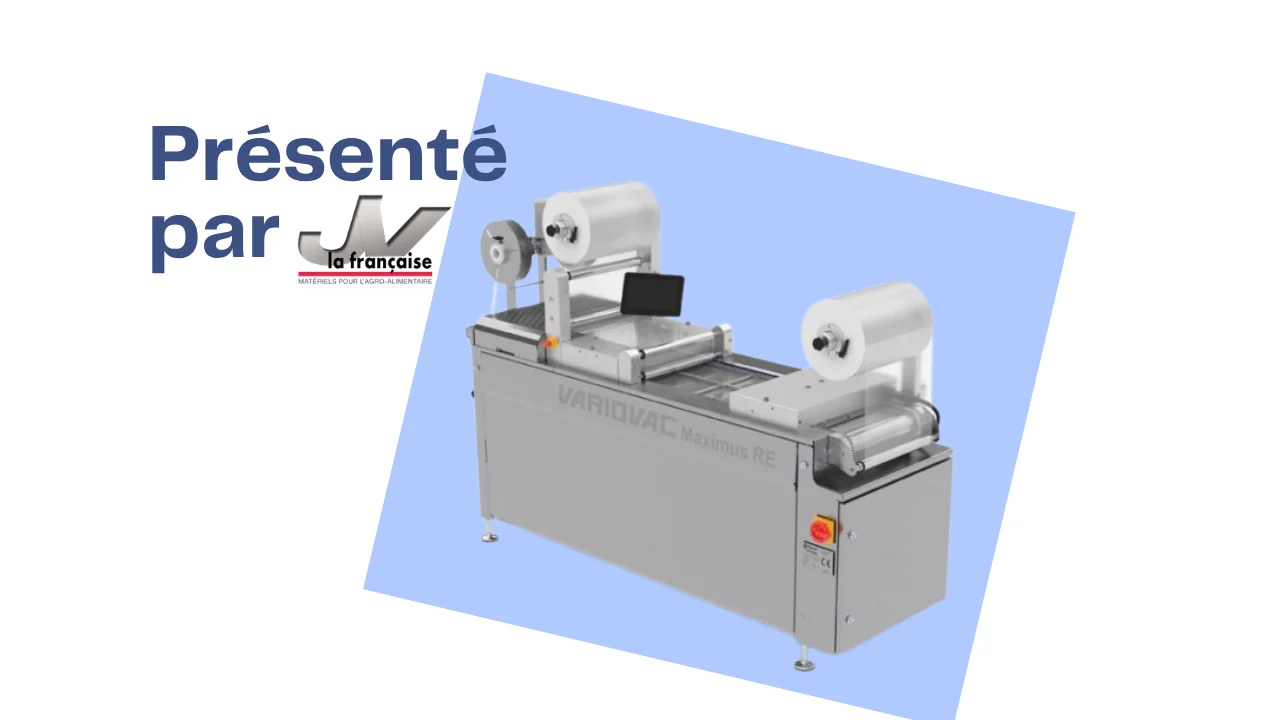
With the Maximus, Variovac offers a compact thermoforming machine designed for small and medium-capacity production facilities.

Distributed in France by the JV/ADP Group, it makes packaging more accessible without compromising on hygiene or quality.

Thanks to its compact footprint (2.20 m x 60 cm), it can be easily integrated into limited spaces. Its ergonomic design, featuring a film roll positioned at operator height and an intuitive interface, makes day-to-day operation easier.

Designed according to Hygienic Design principles, it features an integrated refrigeration unit and vacuum pump. It operates in a closed circuit with no water consumption. Maintenance is also simplified thanks to standard, easily accessible components.

A compact thermoforming solution that enables SMEs to automate their packaging processes while keeping investment, operating costs and environmental impact under control.

Glassine-free labelling for sustainable performance

LOGOPAK presents an innovative glassine-free labelling solution designed to reduce the waste generated during labelling operations. Available in electric or pneumatic versions, this technology combines industrial performance with an eco-design approach.

Capable of handling formats up to A5, the machine achieves a throughput of 20 to 25 cycles per minute and integrates the main logistics and printing standards. A fully electric version also helps reduce energy consumption by eliminating the need for compressed air.

An innovation designed to combine operational efficiency with a reduced environmental impact.

More energy-efficient, more sustainable robots

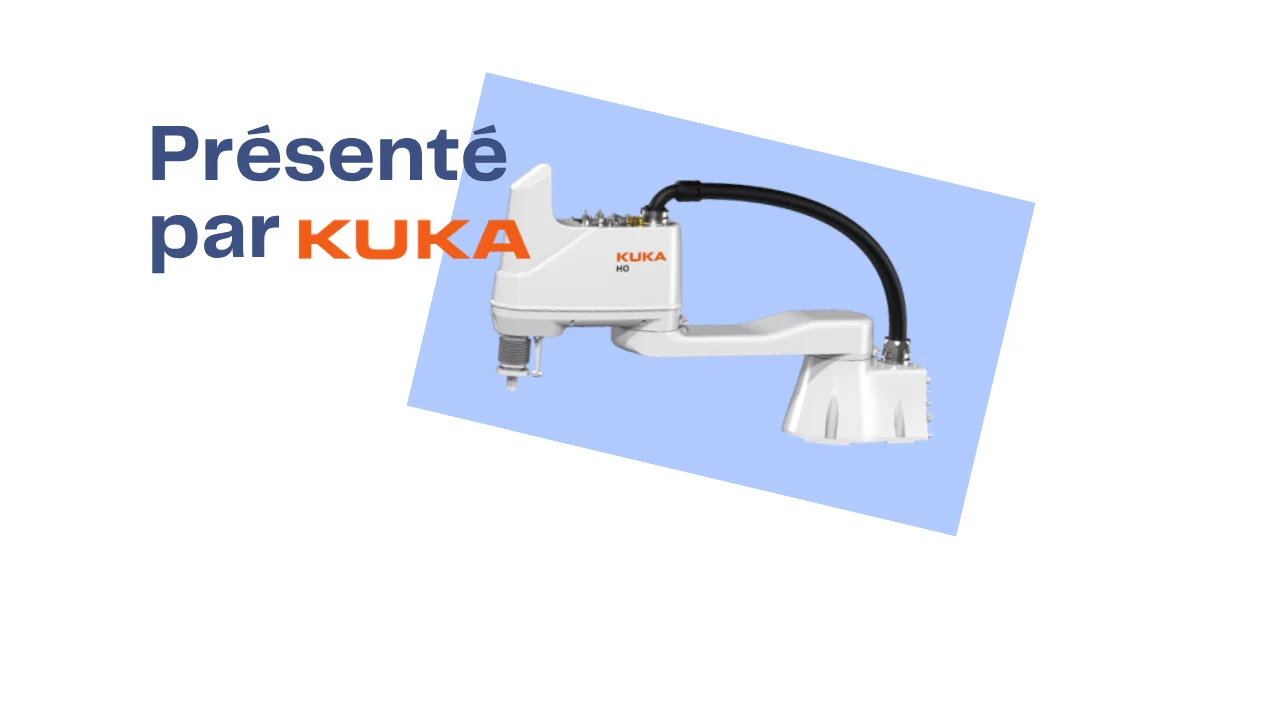
KUKA presents a new generation of industrial robots designed to reduce energy consumption while maintaining a high level of performance.

Depending on the application, energy savings can reach up to 23%, or even more with certain optimised configurations.

Thanks to a lightweight design, optimised drive systems and new control algorithms, the robots consume less energy, particularly during production cycles.

Simulation tools also help optimise robot positioning on production lines, reducing unnecessary movements and energy requirements right from the design stage.

Designed for long-term use, the robots can be retrofitted, making them easier to upgrade and recondition while reducing their carbon footprint and overall operating costs.

A solution combining industrial performance, energy efficiency and sustainability to meet the needs of the food processing industry.
Data-driven industrial cleaning

Kemtag and Onet present a connected solution that enables the measurement and management of cleaning operations in real time. Thanks to sensors installed on equipment, operators can monitor water consumption and track the progress of operations through visual indicators.

The collected data is centralized in a management interface that provides a clear overview of activities, resource consumption, and cleaning performance. The objective: to optimize resources, enhance intervention traceability, and support manufacturers in a continuous improvement approach.

A concrete demonstration of the digitalization of cleaning processes in support of industrial performance.